Table of Contents
Choosing the right hair removal technology depends on more than the treatment area. Your hair type and skin tone can also affect the results.
When comparing diode vs IPL hair removal technology, diode laser hair removal typically delivers greater hair reduction in fewer sessions, while IPL may require more frequent treatments. This is especially relevant in Singapore, where clients have diverse skin tones.
This guide compares diode laser and IPL across different body areas to help you choose the more suitable option.
How Hair Responds Differently Across Your Body
Your body has around five million hair follicles, but hair does not grow or respond to treatment in the same way across every area. Growth cycles, follicle density and hormonal sensitivity all influence how effective hair removal technology will be.
Hair Does Not React the Same Way
Scalp hair can grow for several years because it remains in the anagen, or active growth, phase for much longer. Body hair stays in this phase for only a few months before becoming dormant, which is why leg hair remains relatively short even when left unshaven.
Facial hair behaves differently. Around 56 to 76 percent of facial hairs may be actively growing at one time. This means more follicles can respond during each treatment session.
Hair density varies across different parts of the body. The forehead, for example, has a relatively high concentration of follicles, although many produce fine and less noticeable hairs. The calf has a much lower follicle density but larger follicular openings.
Hair growth speed also differs by area. Underarm hair can grow relatively quickly, with reported growth rates overlapping those seen in scalp hair. This, together with the thickness and pigmentation of underarm hair, can make regrowth noticeable relatively soon after shaving.
Hormones also influence hair growth, particularly facial hair. A high proportion of hairs on the cheeks and upper lip can be in the active growth phase at the same time, although this varies between individuals and ethnic groups.
These differences in follicle density, hair characteristics and growth cycles help explain why laser and IPL hair removal can progress differently across body areas. Treatment timing and the number of sessions needed may therefore vary depending on the area being treated.
Hormonal Hair Can Be More Persistent
Androgens are a group of hormones, including testosterone, that help regulate characteristics such as body hair, facial hair and changes that occur during puberty. They also influence how hair follicles behave, but their effects are not the same across the body.
For example, androgens can encourage thicker, darker hair to grow on areas such as the beard, chest and underarms. On the scalp, however, some people have hair follicles that are genetically more sensitive to these hormones. Over time, this sensitivity can cause the follicles to produce finer, shorter hairs, contributing to androgenetic alopecia, commonly known as pattern hair loss.
Hirsutism is a condition in women that causes extra growth of dark, coarse hair in areas where men typically grow more hair, such as the face, chest, back and abdomen. It is often linked to higher levels of androgens, or to hair follicles that are more sensitive to these hormones.
Hormone-related hair growth may require additional treatment sessions and ongoing maintenance. Hormonal changes around menopause may also contribute to increased facial hair and scalp thinning. Treatment plans should therefore consider the body area, skin tone, hair type and possible hormonal influences.
Diode vs IPL Comparison by Body Area
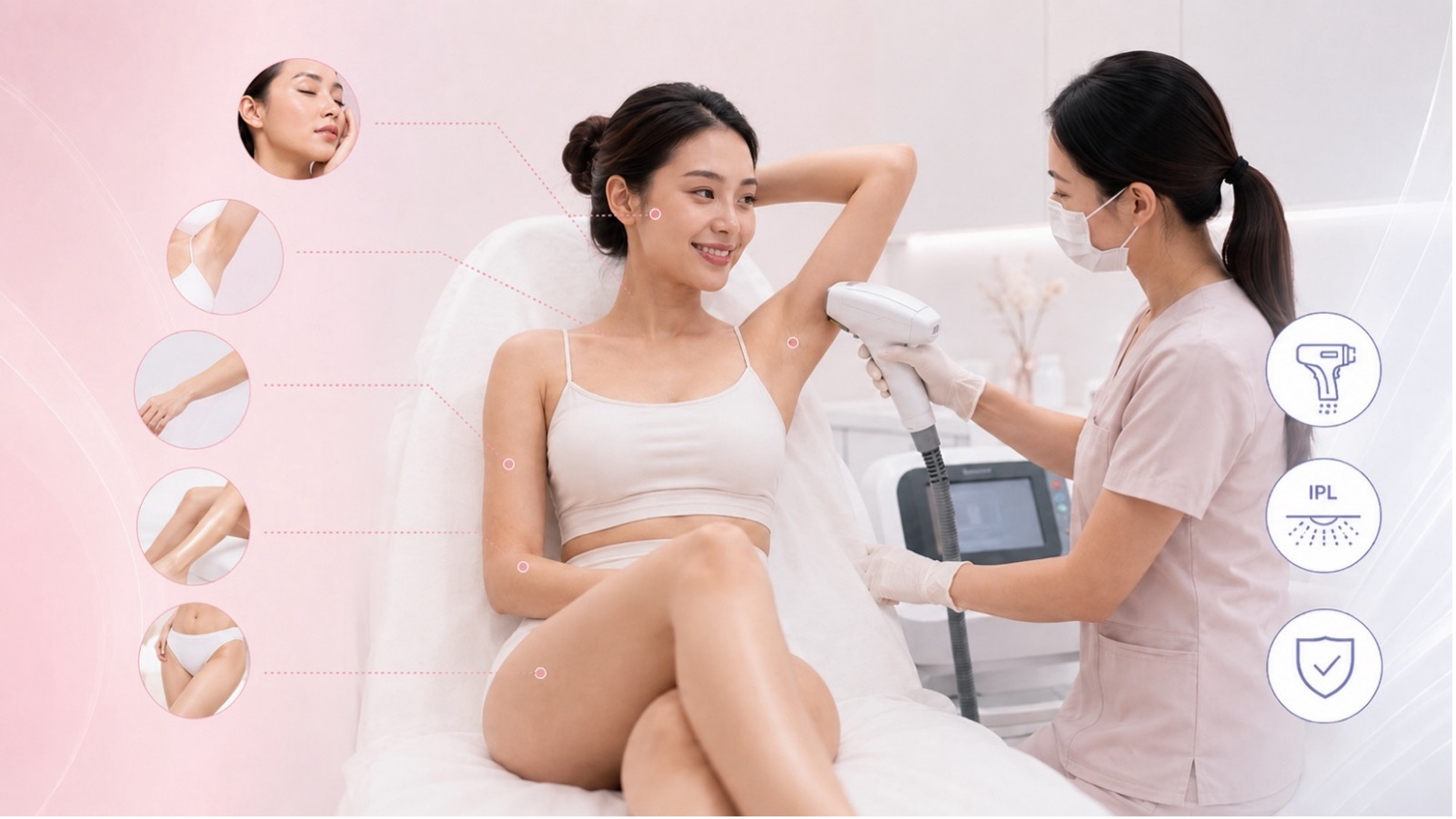
Different body areas respond differently to hair removal because hair thickness, density and growth cycles vary. The table below compares how Diode laser and IPL may perform across common treatment areas.
Body-Area Comparison Table
| Body Area | Diode Laser | IPL |
| Face | Effective for coarse, dark hair and a wider range of skin tones. | Works best on lighter skin with dark hair. |
| Underarms | Well suited to thick, coarse hair. | Effective, but may require more maintenance. |
| Bikini/ Brazilian | Suitable for sensitive areas with proper cooling. | Can work when settings match the skin tone. |
| Legs | May achieve stronger hair reduction on thick, dark leg hair. | Can reduce leg hair effectively but may require more sessions or maintenance. |
| Arms/ Back | Suitable for medium to coarse hair and various skin tones. | Best for lighter skin with darker hair. |
Why Laser Settings Vary by Body Area
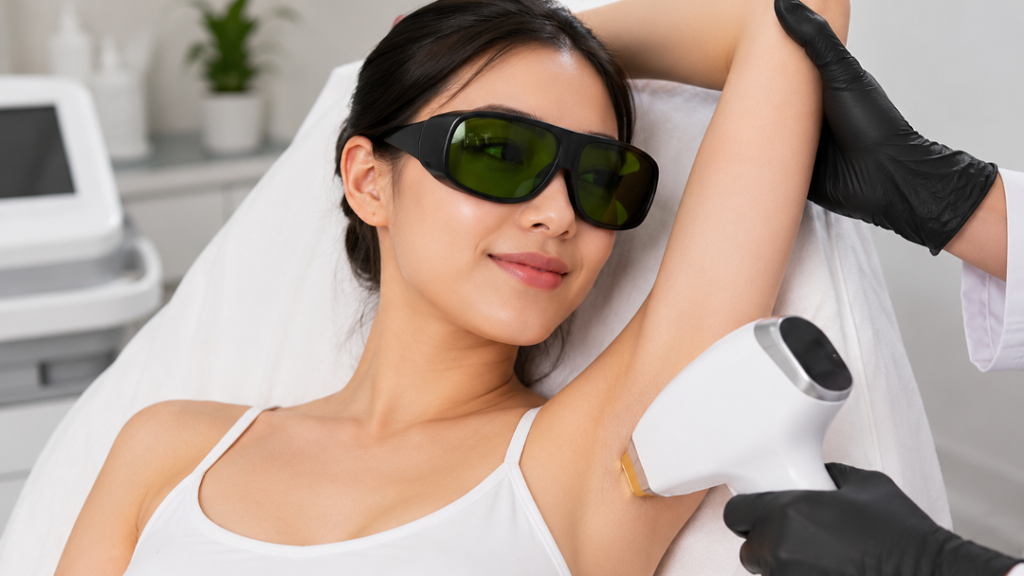
Laser hair removal settings should be adjusted for each body area rather than applied uniformly. Your provider will usually consider two main factors.
Hair Characteristics and Growth Cycles
Different areas have different hair thickness, density and growth cycles. For example, coarse underarm or bikini hair may respond differently from finer facial or arm hair.
Settings may be adjusted according to:
- Hair thickness and colour
- Follicle density
- The percentage of actively growing hair
- Your response to previous sessions
Treatment settings should not automatically increase at every appointment. The safest level depends on how your skin and hair respond.
Skin Tone and Sun Exposure
When comparing diode vs IPL for skin tone, skin pigmentation is an important factor because both technologies rely on light being absorbed by melanin. Recent tanning or prolonged sun exposure can increase the risk of burns and pigmentation changes.
Your specialist may consider:
- Your natural skin tone
- Recent sun exposure or tanning
- Sensitivity in the treatment area
- The device, energy level and cooling method used
Darker skin tones can still be treated safely, but the technology and settings must be carefully selected.
Building a Treatment Plan Around Your Body Areas
An effective treatment plan should consider each area individually. Your skin tone, hair type, treatment area, sensitivity and desired results can all influence the recommended approach.
One Technology Does Not Mean One Setting
Diode laser hair removal technology can treat both small and large body areas, but each session should be tailored to the area and your skin’s response. Delicate areas such as the upper lip and bikini line may need a gentler approach, while larger areas such as the legs and back require efficient, even coverage.
Blush’s SmoothLED system uses multi-wavelength technology to target hair follicles at different depths. Treatment settings can also be personalised according to your skin tone, hair characteristics and sensitivity. Integrated cooling helps minimise discomfort throughout the session.
Why Blush Uses Diode Laser for Multiple Areas
Blush uses advanced diode laser technology for areas ranging from the face and underarms to the legs, back and intimate areas. Its precision and flexibility allow treatments to be adapted for different body zones and individual needs.
Ready to create a personalised treatment plan? Book a consultation with Blush today.
Conclusion
Choosing the right hair removal technology depends on more than the body area alone. Your skin tone, hair colour, hair thickness and sensitivity all influence which technology and settings may work best.
Diode laser is often preferred for its precision and suitability across a wider range of skin tones, while IPL may be more appropriate for lighter skin with darker hair. Since every area responds differently, a personalised treatment plan is essential for achieving safe, effective and long-term hair reduction.
FAQs
Is diode laser hair removal technology more effective than IPL?
Diode laser often provides stronger, longer-lasting hair reduction, especially for coarse, dark hair. IPL can also be effective, but results may require more sessions or maintenance.
Which method is safest for different skin tones?
Diode laser can suit a wider range of skin tones when the settings are properly adjusted. IPL generally works best on lighter skin with darker hair, while darker skin requires greater care.
Can the same settings be used for every body area?
No. Settings should be adjusted based on the body area, skin tone, hair thickness, density and sensitivity.
Why can facial hair require more sessions?
Facial hair can be influenced by hormones, particularly in cases involving PCOS or hirsutism. This may make regrowth more persistent and require additional sessions or maintenance.
Which technology is suitable for intimate areas?
Diode laser is often preferred for bikini and Brazilian areas because it works well on coarse hair. Proper settings and cooling can also help improve comfort and safety.